
A closer look at Lipo Sculpt
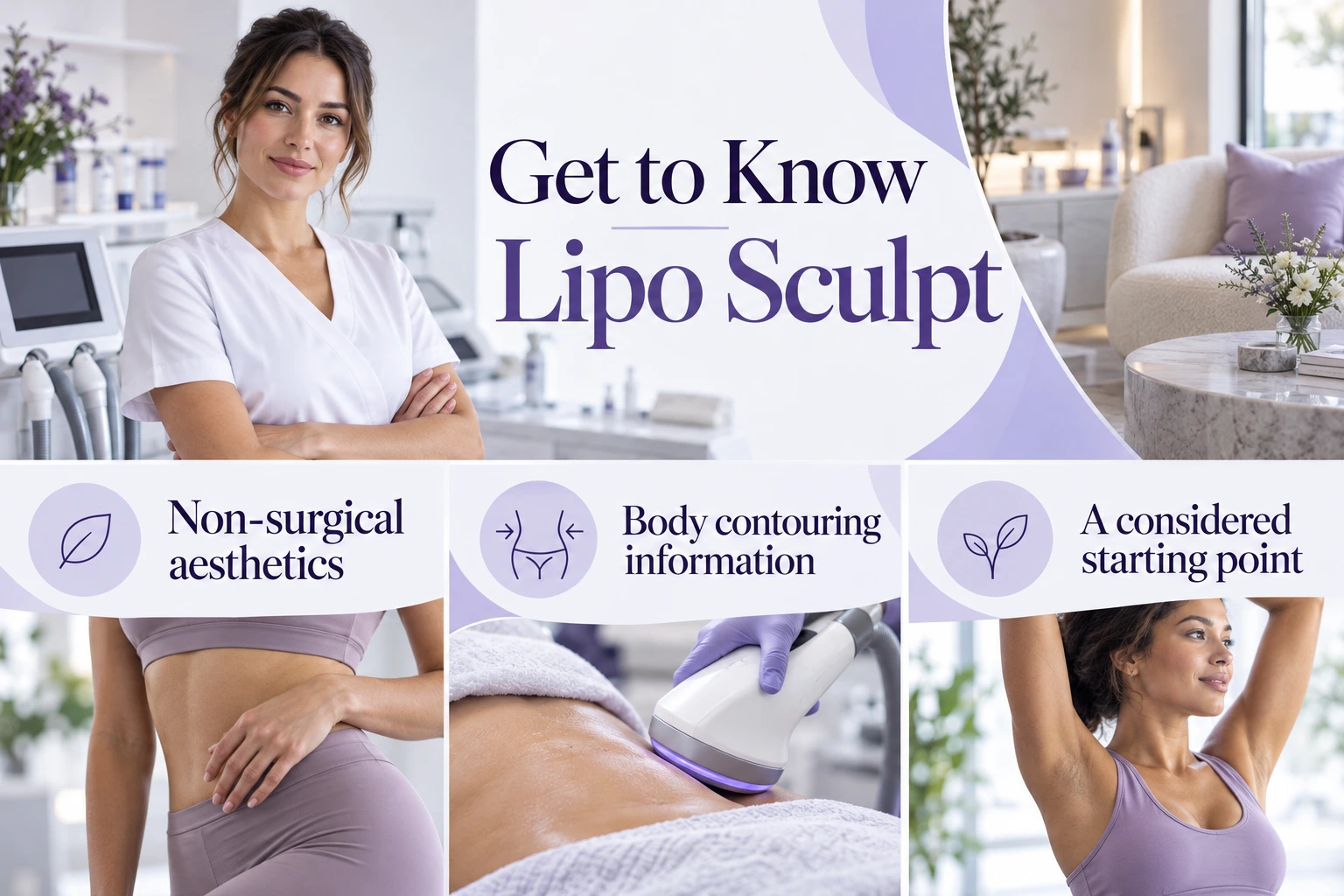
Lipo Sculpt introduces non-surgical aesthetic treatments and body contouring to people exploring a personal change. The starting point is understanding what you are considering, rather than choosing a treatment because its name appears familiar. This page explains the business's published approach to customer communication and offers a practical way to evaluate the information you receive. It is written for someone who wants to know what to ask, what to look for and how to make sense of the next conversation.
The official About page contains a customer charter. Its themes include clear information, courteous communication, confidentiality and listening to feedback. These are useful topics to bring into your own enquiry. You can ask how the team will explain a proposed service, how questions are handled and where to find the information relevant to your situation. The charter is a statement of the business's approach; it is not evidence of a particular individual's qualifications or a guarantee of treatment results.
There is no requirement to arrive with a finished plan. Perhaps you know the area you would like to discuss but have not settled on a service. Perhaps you have read several descriptions and want to understand the distinctions. Either starting point can become a focused enquiry. The sections below are a guide to that process, with room for uncertainty and for choosing to take more time.
Your reason for enquiring comes first
An aesthetic enquiry can begin with an observation rather than a product name. You might want to understand a description of body contouring, ask what a skin-related service involves or find out whether a consultation would be the appropriate next step. Expressing your reason in ordinary language gives the conversation a useful direction. It avoids making a device or treatment label the answer before the question has been explored.
Try describing the aspect you want to discuss and the information you currently lack. For example, you could say that you have seen two service descriptions but cannot tell how their purposes differ. That asks for an explanation without presuming either service is suitable. If your main uncertainty concerns the process rather than treatment, say so. An administrative question about arranging a call needs a different response from an individual question about suitability.
Your preferences also matter as questions. You may want a slower explanation, wish to make notes or need to understand how much further assessment is required. Ask whether these preferences can be accommodated. This guide does not promise a specific consultation format beyond the published information. It encourages you to establish the format before relying on it. A productive starting point is a clear description of what would help you understand your options, followed by an opportunity to clarify the answer.
The customer charter in everyday terms
Published values become easier to assess when you connect them to a real interaction. The customer charter's emphasis on understandable information can become a question about terminology. Its emphasis on feedback can become a question about who receives a concern. Its emphasis on confidentiality can become a question about the appropriate route for sensitive details. These connections help you look beyond a general statement and understand how it relates to your enquiry.
When you receive an explanation, consider whether it answers the question you actually asked. An answer can contain plenty of detail while leaving the important point unresolved. You can bring the discussion back to that point by stating what is still unclear. For instance, you may understand the broad purpose of a service but still need to know whether the next appointment is a conversation, an assessment or treatment. Those are different stages and deserve distinct descriptions.
You can also ask how a subsequent question should be raised. This is particularly helpful if you plan to read information after the initial call. Find out which route is appropriate, what context to include and how the team will identify the enquiry. There is no response-time promise on this page. The aim is to make communication easier to follow, with a clear question, a relevant answer and a practical understanding of what remains to be established.
Understanding the service landscape

Service pages provide an introduction to subjects you may wish to explore. They can help you identify terminology, compare stated purposes and prepare questions about a possible next step. They cannot tell you whether a particular intervention is appropriate for your circumstances. Treat the service directory as a way to organise your reading rather than as an individual recommendation generated by the website.
When comparing descriptions, start with their intended purpose. Two services may both sit within aesthetics while addressing different subjects. A familiar phrase such as contouring can also be used broadly. Ask the team to explain what the phrase means in the particular service you are discussing. Then ask which details require an individual assessment. This separates the general introduction from the information needed for a personal decision.
Keep a short record of the pages you have read and the questions they raised. You do not need to collect every description or master every abbreviation. A note containing the service name, the point you understood and the point you want explained is enough to guide a conversation. If you change your focus while reading, that is useful information too. The purpose of preparation is to improve the quality of your questions, not to establish a treatment choice in advance of the relevant assessment and discussion.
A conversation and an assessment have different roles
Learning about a service, arranging a consultation and assessing suitability are connected activities, but they do not establish the same things. An introductory conversation may help explain options and organise your questions. An assessment concerns the individual information needed to decide whether a proposed treatment is appropriate. Ask how those activities fit together for the service you are considering, including anything that remains to be reviewed in person.
This distinction is helpful when a possible plan is described. You can ask which parts are provisional, which are administrative and which depend on further information. A suggested date is not a clinical conclusion. A description of a treatment is not personal consent. Knowing the status of each part of the discussion helps prevent a tentative option from becoming a commitment in your own notes before the relevant questions have been answered.
If the conversation leaves you uncertain, identify the uncertainty directly. Perhaps you understand how to arrange the next stage but not why it has been suggested. Perhaps you understand the general purpose but need the limitations explained. Those are reasonable subjects for follow-up. This page does not assess you, recommend a treatment or define the business's assessment protocol. Its role is to help you ask where individual decisions happen and what information is needed at each stage before you decide how to proceed.
Expectations worth discussing openly
Different people can read the same description and imagine different outcomes. A phrase that sounds modest to one reader may suggest a major change to another. Explaining your expectations in ordinary terms helps reveal that difference. Ask what the proposed service is intended to address, what it cannot establish and how the relevant professional would explain uncertainty in your circumstances.
Bring questions about limitations into the discussion alongside questions about benefits. You may want to understand the range of possible responses, the need for further assessment or the distinction between an illustration and evidence. Do not use another person's picture as a personal forecast. Even a clearly labelled treatment description does not tell you what will happen for you. A useful explanation should leave you able to distinguish general information from an individual expectation that has actually been discussed.
You can also say what would make you reconsider. That could be uncertainty about the purpose, practical demands you had not anticipated or a difference between your expectation and the explanation provided. You do not have to hide those concerns to keep the conversation moving. Taking them seriously can help you recognise when you need more information. The choice to pause belongs alongside the choice to explore a next step, and neither requires this website to supply a prediction about your results.
Questions about the person providing treatment
If you are considering a treatment, ask who would carry it out and what information you can review about that person's role. A business description and an individual practitioner's background answer different questions. This page does not publish practitioner names, qualifications or accreditation claims because those details have not been independently established for this build. Ask the business for the information relevant to the actual arrangement being proposed.
You may want to know how the consultation relates to the person who would later provide treatment. You can ask whether the same person is involved, how information is passed between stages and what happens if a different person becomes involved. These are questions rather than promises. Avoid assuming continuity simply because a photograph shows one person throughout a series of scenes or because you spoke to someone during an initial enquiry.
When information is supplied, keep the distinction between a general description and a specific confirmation. A statement about the team as a whole may not answer who will see you. A description of training may need further explanation of what it covers. Ask for clarification using the exact point that matters to you. The goal is to understand responsibility and the proposed process, without filling gaps with assumptions based on website styling, a treatment title or an illustrative image of clinical surroundings.
Making room for your questions
Some questions are easy to ask immediately; others appear only after you have reflected. You might remember a practical concern, notice an unfamiliar term in a document or realise that the first answer covered a different point. It can help to keep a separate list of unanswered questions rather than trying to solve all of them in one conversation. Give each question a short title so you can recognise it later.
If an explanation is difficult to follow, ask for it in simpler language. You could request a description of the next stage without abbreviations, ask what a term means in context or ask the speaker to separate the administrative and treatment parts. Repeating an answer back in your own words can show where your understanding differs. This is a practical communication technique, not a substitute for receiving the information relevant to your situation.
Before ending a discussion, identify the question that remains most important. You may have several open points, but one might determine whether you are ready to continue. Ask how that point can be clarified and what, if anything, you need to do next. Your notes should reflect the answer given rather than a deadline or procedure inferred from a general page. A clear record of an unresolved question is more useful than a confident note about something that was never confirmed.
Privacy begins with the channel you choose

The topic of an aesthetic enquiry can be personal. Think about the channel before sharing information rather than treating every available contact route as interchangeable. Public social posts, telephone discussions and external website forms have different contexts. A public comment should not contain details that you intend to keep private. Ask how to provide any sensitive information needed for your enquiry through an appropriate route.
You can make an initial question concise without supplying a full personal history. State the subject and ask what information is needed next. If supporting documents or photographs are requested, clarify why they are needed, how to provide them and which privacy information applies. This page does not provide an upload facility or a secure clinical messaging service. Avoid trying to turn an ordinary social message into either of those services without clarification from the business.
Read the Privacy Policy guide for the distinction between this static website and the official website it links to. The latter has its own published information about data handling. If a privacy question would affect your decision to enquire, ask it before sharing more detail. Confidentiality is a theme of the published customer charter, but a general statement does not explain every channel, recipient or record. Questions about those specifics are part of understanding the process in which you are participating.
Planning around everyday commitments

Before pursuing a possible appointment, consider the practical questions that may affect your availability. You may need to ask where the relevant stage would happen, how the timing is confirmed or what information will be provided before attendance. Location and timing should come from the details confirmed for your own arrangement.
Avoid making travel or other commitments from a provisional suggestion. Ask whether a date is available, reserved or confirmed, and what needs to happen before it becomes definite. If a service description mentions a possible arrangement, check whether it applies to the service and circumstances being discussed. General information about a business does not establish availability for a particular person or area.
Practical questions can also concern the sequence of events. You might want to know whether the next step is another conversation, an assessment or an appointment for treatment. You may need to arrange time to read documents before making a decision. Explain those considerations without assuming the business can offer a particular accommodation. A well-organised enquiry gives the team a clearer question and gives you a better basis for planning. Keep confirmed arrangements separate from ideas you are still exploring so your diary does not become more definite than the conversation itself.
Money questions belong in the discussion
Understanding a possible service includes understanding the arrangement around it. Ask what any proposed payment covers, when it is requested and where the relevant conditions can be read. A consultation fee, treatment deposit and course payment may have different purposes. Do not treat one as another simply because each appears during the same enquiry. The current official consultation information is linked from Book Consultation.
For treatment-related payments, ask for the applicable proposal rather than inferring a price from an unrelated page. You may need to understand whether an amount is for one appointment, a course or a separate stage. If several items are discussed, keep them distinct in your notes. The existence of a payment option does not answer every question about its conditions, or establish that an individual service is suitable.
Read the terms before making a commitment and raise any discrepancy that affects your plans. The Terms & Conditions guide identifies an unresolved difference in published notice wording. This page does not choose which deadline applies or create a new refund promise. A clear payment decision requires the relevant conditions and any outstanding questions to be understood together. If you have not received that clarity, a useful next action is to ask the specific question rather than assume that an attractive description explains the complete arrangement.
Feedback that describes what happened
Feedback is easier to understand when it identifies the interaction and the point you want addressed. The customer charter discusses feedback and courteous communication. If you need to raise a concern, describe what happened in sequence and explain what remains unclear. A short factual account can be more useful than a long message combining several unrelated subjects.
You might begin with the type of enquiry, the explanation you expected and the part you received. If the issue concerns a document, identify the relevant wording. If it concerns an arrangement, distinguish what was suggested from what you understood to be confirmed. This helps the recipient investigate the particular point without guessing which stage of the process you mean. Ask which route is appropriate for any private information needed to identify the matter.
State the response you are seeking, such as clarification of a condition or an explanation of the next step. This guide does not promise a particular remedy, response time or complaint outcome. It also does not replace any process the business provides for your situation. Keep your own record of the question and the answer. If the first reply addresses only part of the issue, identify the remaining point clearly. The aim is an understandable exchange in which the concern and requested clarification can be followed by everyone involved.
Reading images with the right context

Images can make an unfamiliar subject easier to approach, but they answer fewer questions than they may appear to. Illustrative consultation scenes show a topic; they do not identify the actual practitioner, premises or person you would meet. They should not be taken as proof of a clinical setting or a particular experience. The imagery on this website is illustrative and should be read alongside that limitation.
Look to the written information and your individual discussion for the details that affect a decision. A photograph of equipment does not establish what equipment will be used for you. A calm visual composition does not prove comfort, suitability or an outcome. If an image raises a question, turn it into a direct enquiry. Ask what applies to the service you are considering and which details will be confirmed before the next stage.
This approach is especially useful when comparing websites. A polished design can improve readability without providing evidence for every claim. Separate the impression created by imagery from the information actually established. You can appreciate a visual explanation while still asking for the relevant facts. Doing so keeps the role of images proportionate: they support orientation and understanding, while the important personal, clinical and administrative decisions depend on the appropriate information and discussion rather than the appearance of a page.
Support when someone helps you enquire
A friend or family member may help you organise questions or read information. If you want someone involved in a conversation, ask what arrangements are possible and how your permission will be handled. Do not assume that making an enquiry for another person gives access to their records or authority to decide on their behalf. The business needs to explain the appropriate process for the situation.
It can help to distinguish the helper's role. Someone might help with note-taking, practical planning or understanding unfamiliar language. Those roles do not all involve the same information. Discuss what you would like them to assist with and what you prefer to discuss privately. A clear request lets the conversation address the proposed involvement rather than treating it as an undefined permission to share everything.
If you are helping someone else, encourage them to express their own questions and preferences where possible. Your interpretation of their goal may differ from theirs. Keep administrative help separate from an individual treatment decision. This guide does not establish eligibility, consent rules or a special booking service for any group. It suggests asking how support can fit into the actual process, with enough clarity that everyone understands who is enquiring, who is making decisions and which information belongs in the appropriate private discussion.
Deciding what information to keep
After an enquiry, you may have website links, personal notes and information about a possible arrangement. Keep them organised by purpose. General reading belongs in one place; confirmed appointment details belong in another. Questions that remain unanswered deserve their own short list. This separation helps you avoid treating a broad service description as the instruction for a specific appointment.
Date your notes when useful and record where an explanation came from. If you later receive a revised arrangement, mark the earlier one as superseded rather than leaving two versions that look equally current. You do not need to create an elaborate file. A simple list of confirmed details, open questions and relevant documents can be enough to show what you understand and what needs clarification.
Be careful with sensitive notes, especially on a shared device or in a document that others can view. Keep only the information you need for your purpose, and ask the business how any material it needs should be supplied. This website does not store a personal enquiry record for you. Organising your own information can support a clearer conversation, but it does not confirm that the business has received a request or accepted a booking change. For those actions, use the appropriate route and obtain the relevant acknowledgement.
Knowing when to take more time

You may reach the end of an enquiry with useful information but no immediate decision. That is different from an unsuccessful conversation. You might now know which question needs an individual assessment, which practical detail affects your plans or which document you want to read. Identify that next piece of information rather than treating a decision as something that must happen because the conversation has ended.
Taking more time can also mean recognising that your expectations need further discussion. Perhaps the purpose of the service differs from what you first imagined. Perhaps you need to understand the conditions of an arrangement before considering it further. Say which point is holding the decision open. That gives any follow-up a specific purpose and avoids repeating a broad introduction when the uncertainty has become more precise.
There is no treatment recommendation at the end of this page. You can continue reading, ask a question or explore the published consultation route. If you decide to enquire, use Book Consultation for the official next step or Contact Us for the approved telephone route. Let the action match what you need: more information, a clarified condition or discussion of an individual question. A considered decision begins with understanding the relevant information, including the limits of what a website can establish for you.